Should you give your child L-theanine for sleep?

Theanine is becoming one of the most popular supplements taken for sleep. I don’t get asked about it in clinic as much as much as melatonin and magnesium, but parents still ask about it. So I set out to see what evidence, if any, supported its use in children and teenagers. (BTW it is technically L-theanine (or, even more technically, L-γ-glutamylethylamide, N5-ethyl-L-glutamine, or γ-glutamylethylamide) but the prospect of typing that out a million times in this article sent shivers down my spine).
First, I want to offer an important caveat. The vast majority of children struggling with insomnia do not need a medication or a supplement. They will likely benefit from a behavioral approach. For younger children, you should check out my free Sleep Training Starter Kit. For teenagers (and adults), cognitive behavioral therapy for insomnia is very effective. If you are worried about your child’s sleep, please talk to their pediatrician.
My own journey to l-theanine
I was reading the invaluable Consumerlab’s article on melatonin preparations. If you are not familiar with Consumerlab-- I’m a big fan as they perform third party testing on supplements and provide good, common sense advice.
I then started browsing the other supplements in the Sleep category and read about theanine. At the time, they talked about the potential effects on middle of the night awakenings and anxiety-- two issues I was struggling with (likely because of this study by Ozeki). I have been taking theanine since and I think it has helped me, although over time the evidence become more questionable. I really need to do a trial off of it and follow up my Oura ring data to see if it is actually doing anything.
What are the issues with supplements in general
In a nutshell, ever since the Dietary Supplement Health and Education Act (DSHEA) in 1994, it is very easy for supplements to make it to market with minimal or no research on benefits. You can read more about the implications of DSHEA here.
What is it?
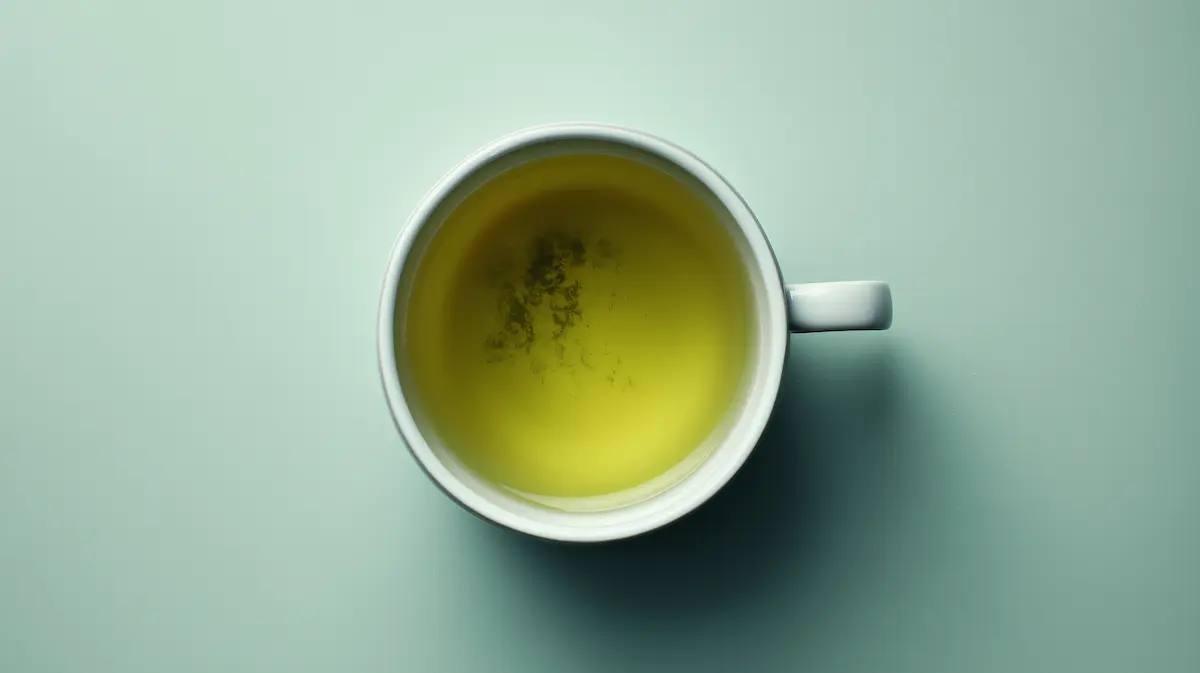
Theanine is a a water soluble amino acid primarily found in black and green tea. Amino acids are the building blocks of protein. Theanine is not an essential amino acid, meaning that you do not need to consume it in your diet to survive.
How does it work?
Theanine is absorbed into the bloodstream and crosses the blood brain barrier; it seems to influence the levels of several neurotransmitter, including some associated with relaxation, such as GABA (gama-aminobutyric acid).
What are the potential benefits?
Theanine has been studied for potential benefits in terms of sleep and cognition, but I’m going to focus mostly on potential sleep benefits. Overall, it seems to cause effects associated with relaxation, such as lowering heart rate, blood pressure and cortisol, and increasing alpha brain waves which are associated with relaxation.
Sleep benefits
Given the issues with supplement research, I’m fortunate (and so are you, dear reader), that there are two excellent and recent systematic reviews (in the bibliography below, but here are the links: Bulman et al 2025 and Cotter et al 2026). Now, an important difference between the studies. Bulman is a meta-analysis where they performed statistical analysis across study types to determine what were real effects. Cotter was a systematic review but did not perform these calculations; the authors though that they were not merited given the differences between the included studies). I should note that the authors on Cotter are employees of The Water Street Collective which sells L-theanine products.
Here are the findings from the two papers:
| Sleep domain | Bulman et al. 2025 Meta-analysis · 19 RCTs · n=897 |
Cotter et al. 2026 Systematic review · 13 trials · n=550 |
|---|---|---|
| Sleep quality | ||
| Sleep onset latency | Benefit (subjective) No effect (objective) |
Benefit |
| Sleep maintenance | No effect Trended positive, p=0.10 |
Benefit Reduced WASO via actigraphy |
| Sleep efficiency | No effect Significant after removing 1 outlier |
Benefit ~3–4% improvement in 2 trials |
| Overall sleep quality | Benefit SMD 0.43, moderate effect |
Benefit Consistent across PSQI & OSA |
| Sleep satisfaction / refreshment | Not pooled separately | Benefit Improved recovery on waking |
| Daytime dysfunction | Benefit SMD 0.33, p<0.001 |
Benefit |
| Sleep quantity | ||
| Sleep duration | No effect SMD 0.02, p=0.80 |
No effect No evidence for longer sleep |
| Special populations | ||
| Clinical insomnia | Mixed 1 trial positive, 1 negative |
Mixed Insufficient evidence |
Here’s the summary: theanine seems to improve subjective sleep quality without increasing how much they actually sleep. They actually feel like they are sleeping better. This seems to actually translate to feeling better the next day, a finding based on the “daytime dysfunction measure” from the Pittsburgh Sleep Quality Index. This assesses how much trouble you've had staying awake during daytime activities and how much of a problem it's been to maintain enthusiasm to get things done, over the past month. This is actually the strongest finding documented in Bulman’s statistical analysis.
Sleep benefits in children
Similarly to magnesium, there is very little in the way of research in children. I could only identify two studies looking directly at theanine and sleep in children, both in children with attention deficit hyperactivity disorder (ADHD). I’m also going to include a study of tea in children with autism spectrum disorder, although I think it is hard to generalize the result.
ADHD and theanine
I found a single trial looking at the effects of theanine on sleep quality in boys (mean age 9.45 years) with ADHD (Lyon et al 2011). . It demonstrated that taking 400 mg of theanine daily resulted in significant improvements in sleep efficiency (time spent sleeping divided by time in bed) and reduced movement during the night. Strengths include the fact that it was placebo controlled and double blinded.
However, there are some very significant limitations. The FDA reviewed this study in 2024 and raised several concerns: the researchers didn't identify a primary endpoint or provide a conventional statistical analysis plan, and none of the results actually met their own pre-specified significance threshold. Baseline sleep measures weren't reported, only boys were included, and the researchers didn't analyze whether being on stimulant medication (which is known to disrupt sleep) affected the results. The parent-reported sleep questionnaire data was collected but never discussed. It's also worth noting that the study was funded by the manufacturer of the theanine product used.
Autism spectrum disorder and theanine
Take this one with a grain of salt. Researchers looked at the effect of several types of tea (Oolong-- high in GABA, green tea-- high in theanine, control) in effects on multiple domains in 9 children with autism-spectrum disorder (ASD). Neither tea demonstrated (to me) a significant change in sleep or cortisol levels. Limitations include small size, and the fact that all treatments included some GABA and theanine. Hannant et al 2021..
Problems with l-theanine
I could not find any evidence of drug interactions between theanine and other medications, but I would avoid using it along with other sleep promotion medications or blood pressure medications (as it can lower blood pressure).
The majority of the trials demonstrated minimal side effects.
However, the evidence is sparse, and practically non-existent in children. (Bulman included the Hannant tea paper, but Cotter did not). The FDA looked at it for pharmaceutical use in 2024 and found insufficient evidence to support its use in compounded medications.
Dosing recommendations
Both of the reviews converge on the ideal dose of theanine being 200-450 mg daily, typically taken before bed. There are no weight based pediatric guidelines, which is another reason to avoid this for your child.
Conclusion:
Theanine is a commonly discussed supplement in the sleep space. It seems to be reasonably safe, but I would not recommend using it in children as there is only one study supporting its use. I do think it may be reasonable to try in adults with mild insomnia and anxiety given that the evidence suggest that it may be helpful (and I do use it myself). As always, discuss with your doctor (or your child’s doctor) if you are considering a supplement.
Bibliography
- Cotter J, Caddick CE, Harper JL, Ebajemito JK. Examining the effect of L-theanine on sleep: a systematic review of dietary supplementation trials. Nutritional Neuroscience. 2026;29(2):224-238. doi:10.1080/1028415X.2025.2556925
- Payne ER, Aceves-Martins M, Dubost J, Greyling A, de Roos B. Effects of Tea (Camellia sinensis) or its Bioactive Compounds l-Theanine or l-Theanine plus Caffeine on Cognition, Sleep, and Mood in Healthy Participants: A Systematic Review and Meta-Analysis of Randomized Controlled Trials. Nutr Rev. 2025;83(10):1873-1891. doi:10.1093/nutrit/nuaf054
- Bulman A, D’Cunha NM, Marx W, Turner M, McKune A, Naumovski N. The effects of L-theanine consumption on sleep outcomes: A systematic review and meta-analysis. Sleep Medicine Reviews. 2025;81:102076. doi:10.1016/j.smrv.2025.102076
- Al Shahab S, Al Balushi R, Qambar A, et al. Efficiency of Different Supplements in Alleviating Symptoms of ADHD with or Without the Use of Stimulants: A Systematic Review. Nutrients. 2025;17(9). doi:10.3390/nu17091482
- Moulin M, Crowley DC, Xiong L, Guthrie N, Lewis ED. Safety and Efficacy of AlphaWave® l-Theanine Supplementation for 28 Days in Healthy Adults with Moderate Stress: A Randomized, Double-Blind, Placebo-Controlled Trial. Neurol Ther. 2024;13(4):1135-1153. doi:10.1007/s40120-024-00624-7
- Innocenti A, Lentini G, Rapacchietta S, et al. The Role of Supplements and Over-the-Counter Products to Improve Sleep in Children: A Systematic Review. Int J Mol Sci. 2023;24(9). doi:10.3390/ijms24097821
- Deshpande SN, Simkin DR. Complementary and Integrative Approaches to Sleep Disorders in Children. Child and Adolescent Psychiatric Clinics of North America. 2023;32(2):243-272. doi:10.1016/j.chc.2022.08.008
- Hannant P, Cassidy S, Renshaw D, Joyce A. A double-blind, placebo-controlled, randomised-designed GABA tea study in children diagnosed with autism spectrum conditions: a feasibility study clinical trial registration: ISRCTN 72571312. Nutr Neurosci. 2021;24(1):45-61. doi:10.1080/1028415X.2019.1588486
- Hidese S, Ogawa S, Ota M, et al. Effects of L-Theanine Administration on Stress-Related Symptoms and Cognitive Functions in Healthy Adults: A Randomized Controlled Trial. Nutrients. 2019;11(10):2362. doi:10.3390/nu11102362
- Anand S, Tong H, Besag FMC, Chan EW, Cortese S, Wong ICK. Safety, Tolerability and Efficacy of Drugs for Treating Behavioural Insomnia in Children with Attention-Deficit/Hyperactivity Disorder: A Systematic Review with Methodological Quality Assessment. Paediatr Drugs. 2017;19(3):235-250. doi:10.1007/s40272-017-0224-6
- Lyon MR, Kapoor MP, Juneja LR. The effects of L-theanine (Suntheanine®) on objective sleep quality in boys with attention deficit hyperactivity disorder (ADHD): a randomized, double-blind, placebo-controlled clinical trial. Altern Med Rev. 2011;16(4):348-354.
- L-Theanine Supplements Review & Top Pick. ConsumerLab.com. Accessed April 4, 2026. https://www.consumerlab.com/reviews/l-theanine-supplements-review/l-theanine/
- Here’s What You Need To Know About L-Theanine. Cleveland Clinic. Accessed April 4, 2026. https://health.clevelandclinic.org/l-theanine
- U.S. Food and Drug Administration. FDA Evaluation of L-Theanine for Inclusion on the 503A Bulk Drug Substances List. Briefing document for the Pharmacy Compounding Advisory Committee (PCAC) meeting, October 29, 2024. https://www.fda.gov/media/182086/download
Originally published April 2026. Last reviewed/updated by Dr. Craig Canapari, MD in May 2026
No spam, no sharing to third party. Only you and me.